
Mangroves as Coastal Buffer Systems: Analysis of Ecological Functions and Degradation Dynamics
Article Sidebar
-
coastal buffer system, coastal vulnerability, mangrove degradation, mangrove ecosystem, Muara Gembong
Abstract
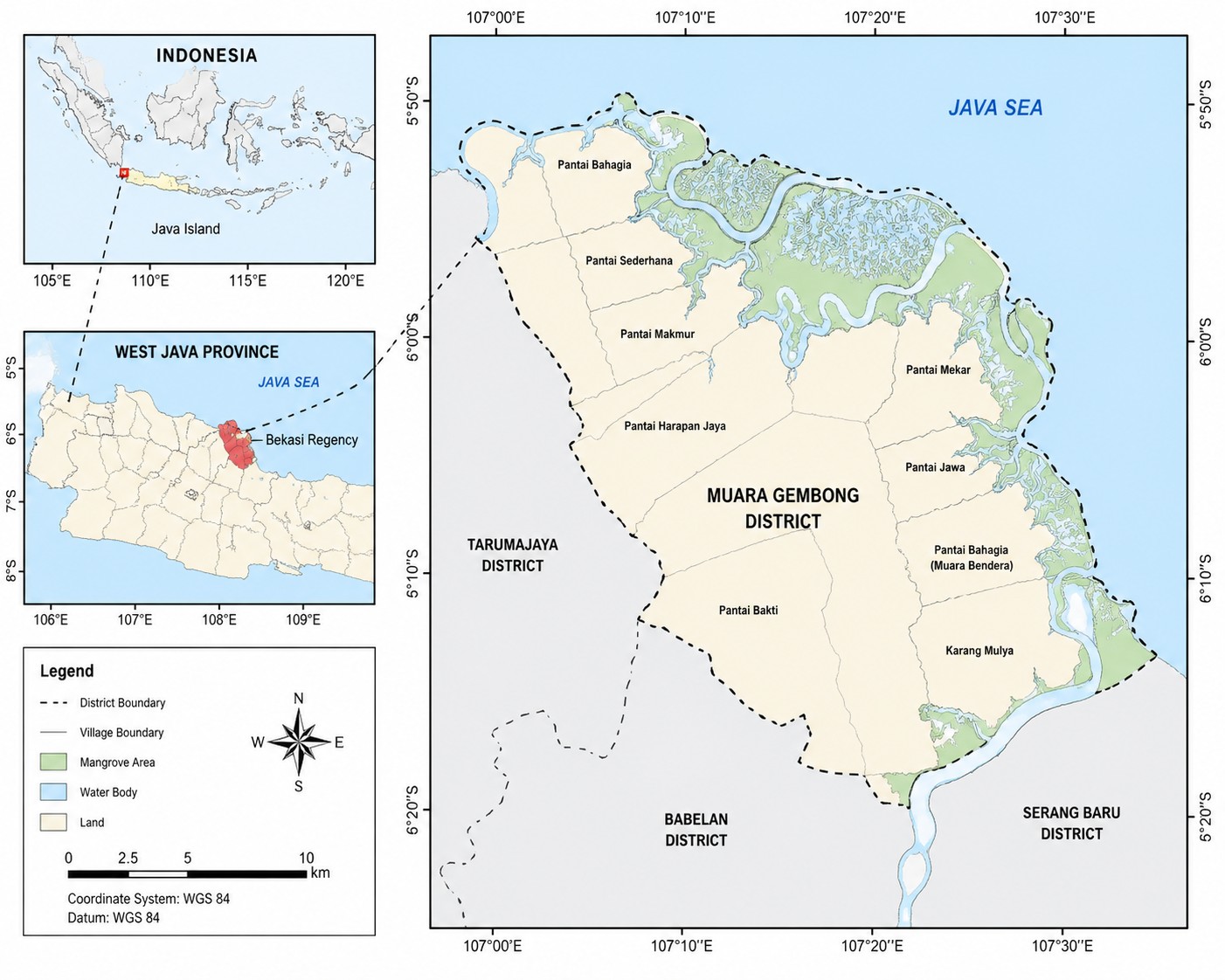
Mangrove ecosystems function as critical coastal buffer systems that provide ecological, physical, and socio-economic benefits. However, increasing anthropogenic pressures have accelerated mangrove degradation, particularly in vulnerable coastal regions such as Muara Gembong, Bekasi. This study aims to analyze the ecological functions of mangroves, identify the drivers and dynamics of degradation, and assess their implications for coastal vulnerability using a qualitative Systematic Literature Review (SLR) based on the PRISMA framework. A total of 1,860 records were initially identified, with 160 studies selected for final synthesis after a rigorous screening process. The results indicate that mangroves play a crucial role in supporting biodiversity, regulating nutrient cycles, storing blue carbon, and attenuating wave energy while stabilizing shorelines. However, these functions have significantly declined due to land-use conversion, particularly for aquaculture, along with socio-economic pressures and environmental dynamics. This degradation has increased coastal vulnerability, manifested in erosion, tidal flooding, and reduced community resilience. This study demonstrates that mangrove degradation is a multidimensional socio-ecological process and proposes an integrated analytical framework linking ecological functions, degradation dynamics, and coastal vulnerability. This framework provides a conceptual foundation for strengthening sustainable coastal management strategies in tropical regions.
Full text article
Authors
Authors retain copyright and grant the Journal of Smart Agriculture and Environmental Technology (JOSAET) the right of first publication. Articles published in JOSAET are licensed under the Creative Commons Attribution 4.0 International License (CC BY 4.0), which permits use, sharing, adaptation, distribution, and reproduction in any medium or format, provided that appropriate credit is given to the original author(s) and the source, a link to the license is provided, and any changes made are indicated.