
Machine Learning-Driven Smart Aquaculture Technology for Climate-Resilient Water Quality Monitoring
Article Sidebar
-
Water Quality, Aquaculture, Climate, Machine Learning, Fish Farming
Abstract
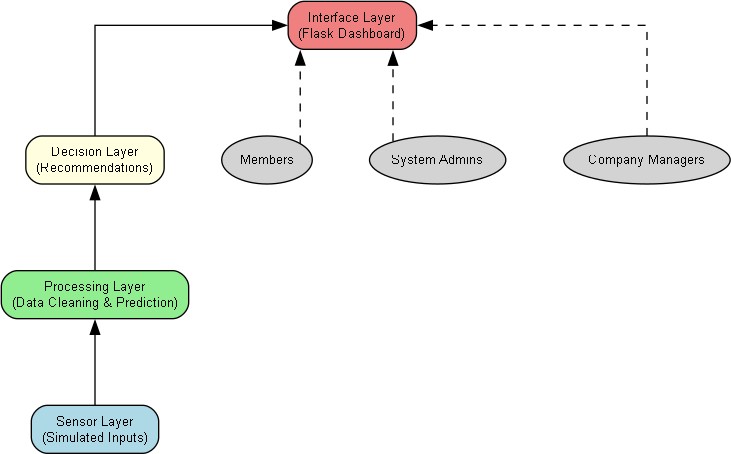
The aquaculture sector is among the fastest-growing food production industries, playing a critical role in global food security by supplying high-quality protein to millions. However, climate change has introduced severe challenges, disrupting production through altered temperature regimes, unpredictable rainfall, and deteriorating water quality. Key parameters such as pH, dissolved oxygen (DO), and salinity have shown significant fluctuations, which are directly affecting fish health, growth rates, reproduction, and overall pond productivity. To address these challenges, this study proposes an integrated IoT and machine learning (ML) framework designed for real-time water quality monitoring and adaptive management in aquaculture systems. The primary objective is to enhance climate resilience by enabling data-driven decision-making for optimal fish health and production efficiency. A comprehensive dataset was sourced from reputable offline and online repositories, and then partitioned into training (90%) and testing (10%) subsets. Water quality was classified into two categories: “good” and “bad” based on critical thresholds for aquaculture sustainability. Four supervised machine learning algorithms were evaluated for classification performance, including Random Forest (RF) with an accuracy of 100%, demonstrating superior predictive capability, and Logistic Regression (LR) with an accuracy of 57%, indicating moderate performance, Support Vector Machine (SVM) yielded an accuracy of 62%, suitable for certain nonlinear patterns, and Naive Bayes (NB) attained 89% accuracy, offering a balance between speed and reliability. This research paves the way for next-generation smart aquaculture systems, bridging the gap between environmental monitoring and AI-based decision support.
Full text article
Authors
Authors retain copyright and grant the Journal of Smart Agriculture and Environmental Technology (JOSAET) the right of first publication. Articles published in JOSAET are licensed under the Creative Commons Attribution 4.0 International License (CC BY 4.0), which permits use, sharing, adaptation, distribution, and reproduction in any medium or format, provided that appropriate credit is given to the original author(s) and the source, a link to the license is provided, and any changes made are indicated.